
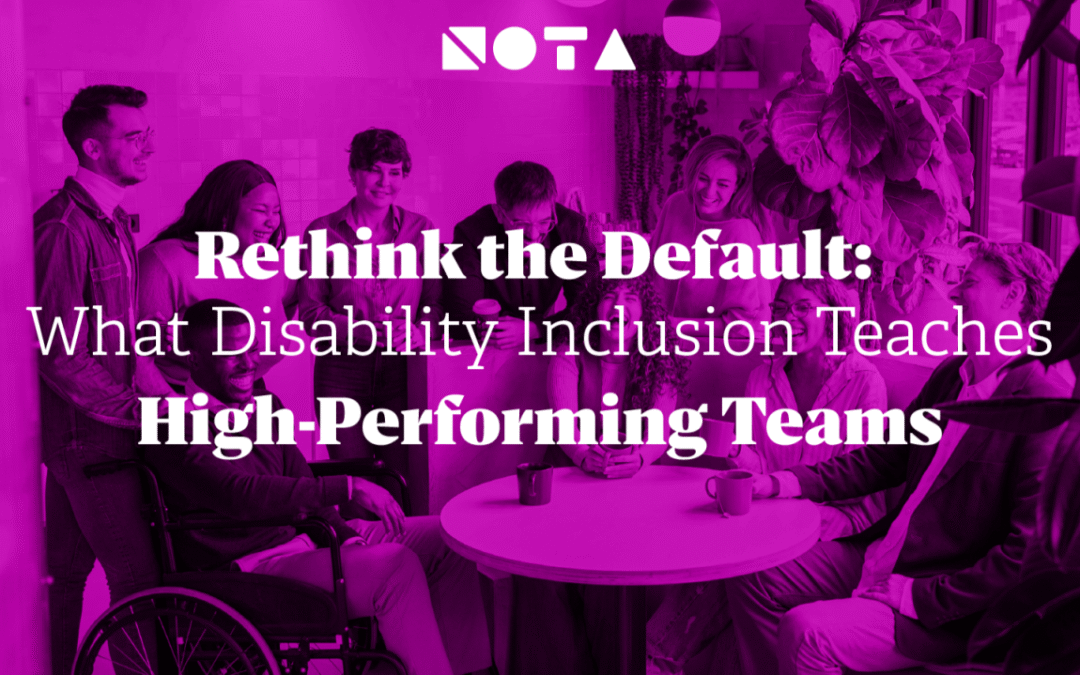
Rethinking the default creates advantage. Simple as that. Because when you build systems accommodating complexity, you build systems that scale.
Organizations that integrate disability-informed thinking often unlock efficiency, clarity, and engagement benefits that go far beyond any one group. In fact, companies leading on disability inclusion report 2x the economic profit and 2.6x the net income of their industry peers.
The ROI of designing beyond the norm
- Better systems through constraint. Designing for a range of physical, sensory, and cognitive experiences pushes teams to clarify workflows, reduce friction, and make tools work better for everyone. Think captions that boost engagement for all viewers, or structured agendas that help every meeting run smoother.

In There is No DEI Without Disability, Catarina Rivera breaks down how accessibility isn’t a separate track but an engine for smarter systems and broader impact.
- Reduced attrition, higher loyalty. When employees feel supported through health changes, neurodivergence, or chronic illness, they stay longer and contribute more. Flexibility and access are not perks. They’re retention tools.
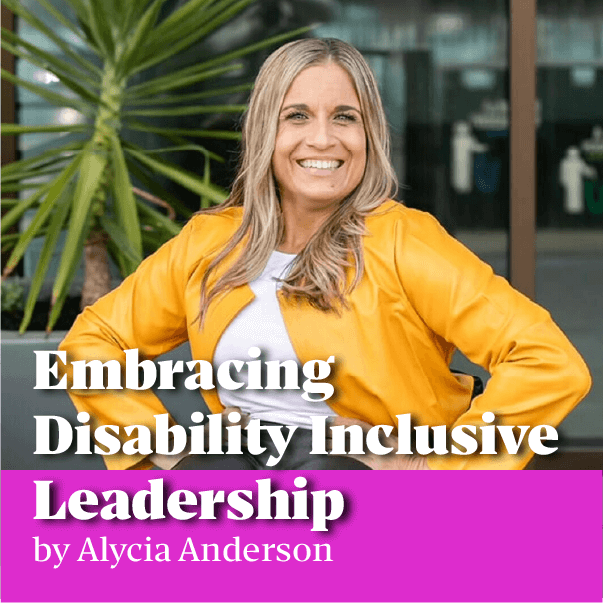
Alycia Anderson’s Embracing Disability Inclusive Leadership shows how embedding inclusion into management culture boosts morale, longevity, and leadership potential.
- Innovation from the margins. Many of the technologies we now consider standard (text-to-speech, voice assistants, curb cuts) originated from disability needs. Inclusion often seeds invention.

Sara Minkara’s In the Dark method demonstrates how removing visual cues can unlock new ways of thinking, leading to breakthroughs in collaboration, trust, and team cohesion.
Design tactics for leaders to rethink the default
- Normalize variability. Replace “normal user” assumptions with design questions like: What if someone can’t use a mouse? What if they’re managing chronic pain? What if they best process information visually, not verbally?
- Incorporate accessibility into product sprints and org design. Make accessibility checks as routine as QA testing. Also ensure people with disabilities are part of the design process as testers and leaders.
- Define performance by results, not resemblance. If your top performer is someone who needs a nontraditional schedule or uses assistive tech, so be it. Performance is output, not optics.
Audit your friction points. Where do people drop off in your onboarding process? Where are meetings failing to align teams? Disability-informed thinking often identifies the very cracks “high-performers” fall into.
- Shift from “accommodate” to “anticipate.” Don’t wait for an employee to disclose. Build systems with flexibility baked in: modular deadlines, multiple formats, asynchronous options. Everyone benefits.
The Real Competitive Advantage
Disability inclusion teaches teams to be precise, adaptive, and clear. These aren’t soft values. They’re the infrastructure of high performance.
So the question isn’t, “Are we being inclusive?” The question is, “Are we building systems that help all our people do their best work without first needing to ask permission?”
When you rethink the default, you don’t just create access. You create advantage.