Author: Nathan Morales, Organizational Belonging Consultant
Leaders spend enormous energy scanning visible trends, watching market shifts, regulatory movement, and new technologies for their strategy. Despite this exhaustive search, many future-shaping forces operate just beneath the surface of everyday decisions, appearing in places rarely examined—like emerging technologies quietly reshaping markets.
Progress increasingly bubbles up where disciplines overlap. People shaped by different experiences bring distinct ways of seeing the same challenge, revealing possibilities hidden in plain sight. Across boundaries, curiosity thus becomes strategy by expanding how organizations think about growth. Leaders open to voices outside their usual circles gain clearer views of what shifts around them and how their choices shape what comes next.
Related: Talks That Stick: Turning Guest Speakers into Organizational Growth Catalysts
Why this matters
The Harvard Business Review argues companies borrowing insights from outside their sector generate significantly higher breakthrough outcomes than peers relying solely on internal expertise. Ideas travel farther when leaders actively expose teams to unfamiliar perspectives and intellectual frameworks.
The challenge for most lies in access: identifying credible voices who translate complex fields into practical insights takes time and careful curation. NOTA Inclusion helps companies close gaps by designing leadership programs and connecting teams with speakers whose expertise bridges industries, disciplines, and lived experience. These sessions help organizations surface hidden dynamics influencing strategy, culture, and innovation to convert insight into action
What organizations can do
- Host cross-discipline signal briefings. Companies can convene quarterly forums where experts from unrelated sectors examine the same business challenge. A telecom firm might invite an epidemiologist, a behavioral scientist, and a futurist to explore how data flows influence public trust. These sessions reveal patterns leaders rarely see when conversations remain inside industry boundaries.
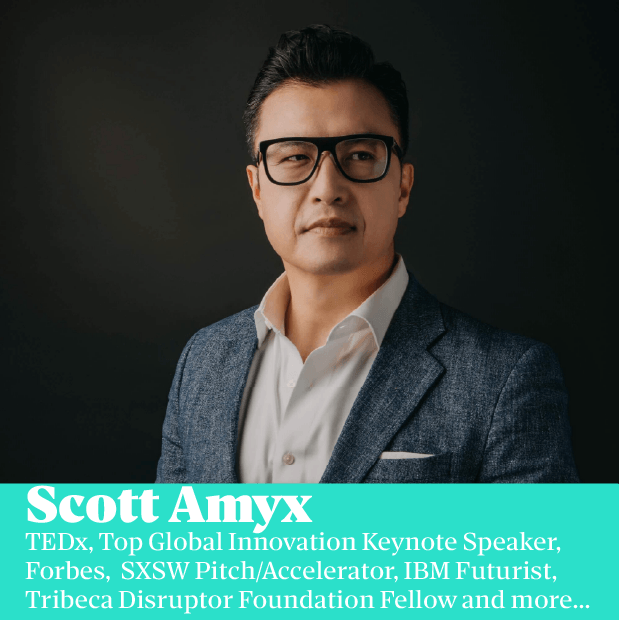
- Strengthen future literacy across leadership teams. Organizations may train executives to interpret emerging technologies and long-range systems thinking. Scott Amyx’s work equips leaders to recognize technological signals shaping markets long before they become mainstream disruptions

Turn behavioral insight into leadership infrastructure. Forward-thinking companies could study how micro-behaviors influence “influence” itself. Vanessa Van Edwards’ lessons help teams understand how body language, tone, and subtle cues shape trust, persuasion, and leadership credibility in high-stakes environments

- Embed scientific curiosity into organizational culture. Some companies will want to partner with researchers to explore how scientific thinking sharpens decision-making. Dr. Glenn Simmons Jr.’s session, Culture is the Key, illustrates how representation, mentorship, and storytelling can expand the scientific imagination while strengthening leadership pipelines.
- Create “perspective residencies.” Organizations could opt to invite thinkers from outside their sector to spend short residencies with product teams, strategy groups, or leadership cohorts. An urban planner might advise a logistics firm on spatial systems thinking; a neuroscientist could help marketers rethink attention and decision behavior.